

Remote work has risen rapidly, despite slight returns to “normal” after the pandemic. In many major industries — including finance, management, professional services, and more — nearly 40% of the workforce is remote.
Even though it’s often a choice to work remotely, the question of maintaining work-life balance when working from home can still be complex. For many people, remote work improves focus, reduces commute stress, and creates more time for family or hobbies. But some people also feel like remote work can blur the lines between work and personal life — which may end up creating longer work hours, less structure, and more stress.
Achieving remote work life balance is tricky. The reality is that working remotely can both support and strain your mental and physical health. The key is understanding how the relationship between remote work and well-being actually plays out — and then putting strategies in place to protect your balance.
Get depression therapy in NYC to find relief from professional burnout and stress.
How does remote work affect mental health?
Remote work can affect the health of remote employees in both positive and negative ways. How it affects you depends heavily on your work environment and the demands of work.
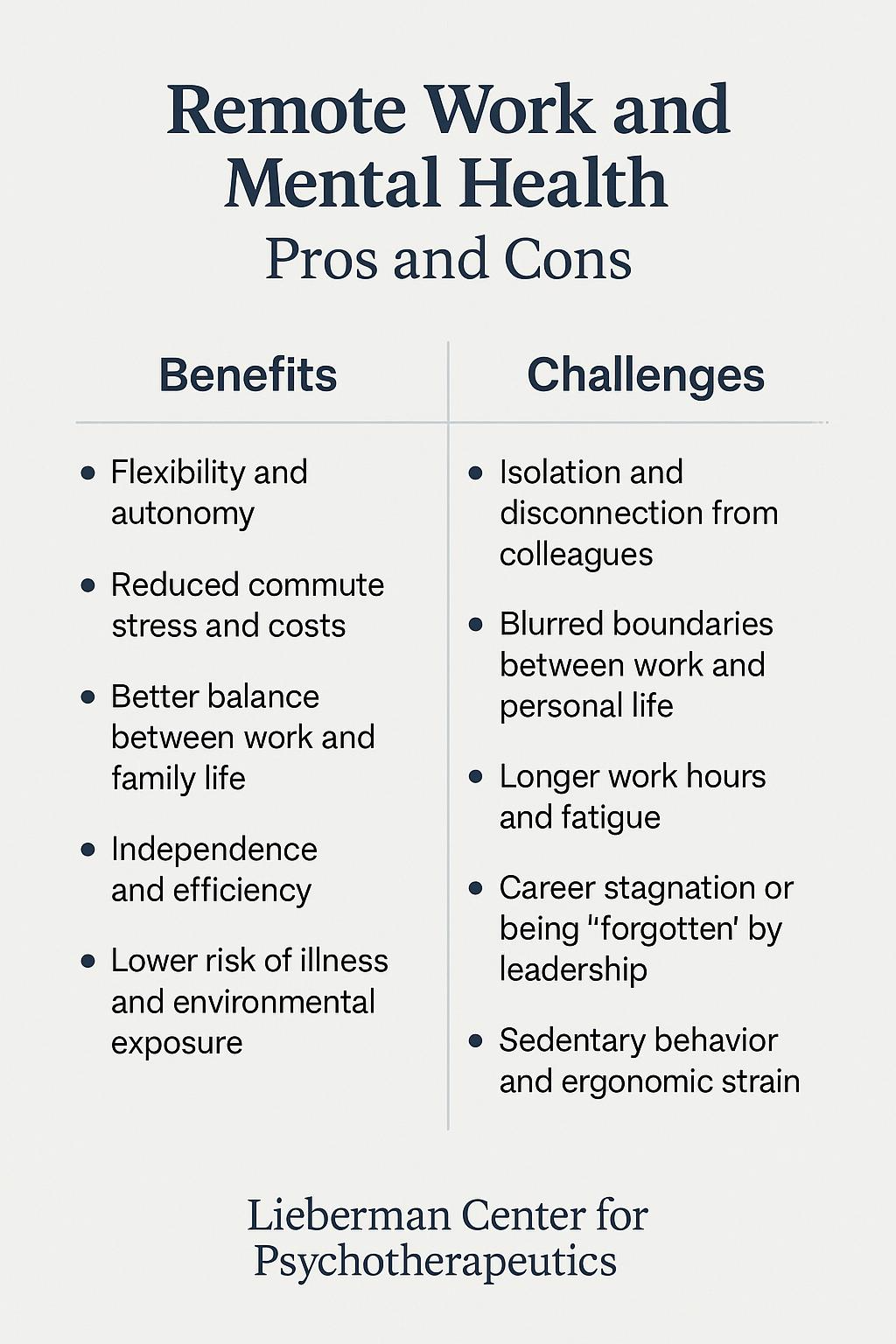
A 2024 systematic review described teleworking as having a “dualistic” nature. In other words, working at home can greatly improve life satisfaction by reducing commute time and offering flexible work arrangements. But it can also create isolation, monotony, and career stagnation if it isn’t managed well. The key is finding the right balance.
Is remote work good for work-life balance?
On the positive side, researchers have found that remote work offers greater autonomy, independence, and efficiency. Having more control over your work day makes it easier to balance work and personal responsibilities. This might mean you have more time to spend on work and family life, to exercise, or to simply rest.
Remote work can also protect your mental health. A 2023 review found that remote work provided relief from stressful commutes, rigid schedules, and toxic work culture. Remote work options give you the chance to shape your work practices around your needs — and that can improve your quality of life and overall work experience.
Disadvantages of remote work
But for some remote workers, there are significant challenges of remote work that can’t be ignored.
The same 2024 review highlighted that remote employees often report higher levels of isolation and disconnection from colleagues. You might start to feel “forgotten,” which can slow career growth and worsen job satisfaction.
Another risk is the blurring of boundaries between work and personal life. Without a commute or a separate physical space to mark the start and end of the work week, you might feel like it’s hard to switch off work mode. Over time, this can damage the balance between work and personal life and increase stress.
It’s also important to note that the impact of remote work isn’t the same across groups. Gender differences have been observed, with women more likely to report negative effects on wellbeing and work-life balance, often because women take on most of the burden of family responsibilities. Existing mental health issues can also be worsened in a remote work setting if those pressures go unchecked.
How to find good work-life balance when you work from home
If you’re full-time remote, it’s essential to build a way of working remotely that protects both your performance and your health. These remote work strategies can help you maintain a healthy balance across work and life.
Create a clear, physical boundary between work and personal life
Without a commute, the line between work and private life can get blurry. So it might be up to you to create that distinct work boundary between office and home.
For example, set up a home office space, even if it’s just a corner of a room. Establish clear work hours — and stick to them (you might even set an automatic reply to emails outside of those hours). When the work day ends, firmly close your laptop and physically leave the work environment.
These strategies aren’t always realistic for every profession. But if you can make the clear boundaries between work and life as defined as possible, it can help you turn off work mode and reconnect with your personal life.
Keep a consistent daily structure
Remote work provides flexibility, but too much flexibility can increase work pressure. When you know you can work at any time, you might start to feel like you “should” be working at home all the time. So it’s important to define exactly what time is set aside for work — and what times are protected for your life outside of work.
As much as possible, try to build a routine with consistent start and end times, breaks, and lunch away from your desk. That doesn’t mean your routine needs to look like it would in the office. For example, maybe you prefer to eat at your desk so you can finish earlier. That’s okay — the important thing is to effectively manage work in a way that fits your life.
Protect social connection
One of the biggest reported challenges of remote work is isolation. The connection you get from work activities is especially important when you don’t have strong support networks unrelated to work.
If you like your colleagues, check in with them regularly. If not, remember that fellow remote workers aren’t your only option for social connection. Outside of work, be intentional about building social connection with friends and family. Invest in your relationships and lives outside of work. Remote and hybrid setups provide independence, which is great — but you still need social support to maintain your mental health.
Move your body throughout the day
Exercise is one of the best ways to support your overall health, but studies show that remote work arrangements often increase sedentary behavior. It’s so easy to open your laptop when you’re still in your pajamas and stay that way until evening.
Build movement into your work day naturally by standing, stretching, or taking short walks between work activities. If possible, arrange your home office ergonomically to reduce strain. Try to maintain an exercise routine that works for you, even if it’s just a quick walk during your “lunch break.”
Be intentional with technology
Remote work depends on technology, which can be a blessing and a curse. Being “always online” can create a pressure in your life that gets in the way of work-life balance. Without boundaries, the lines between work and personal can start to blur. You might find yourself staying in work mode long after the day ends.
Setting clear rules for when you’re reachable through tech can help prevent constant interruptions in the rest of your life. For example, you might turn off work notifications after hours to reestablish control and give your brain space to recover.
There’s also the issue of screen time. Research has found that remote work is associated with longer hours in front of a screen, which is linked to mental and physical health risks. Protecting your work-life balance and well-being means not only setting boundaries around work tech, but also being deliberate about screen time in general. Rest your eyes, and enjoy your offline life when possible.
Use flexibility to support life outside of work
One of the biggest benefits of remote work is flexibility. Use it deliberately. If you save time by not commuting, use it intentionally on other activities that genuinely improve your work life balance. This can be things like exercise, family time, creative projects, or simply rest.
Flexibility is also about shaping your day in a way that supports your overall well-being. For example, you might use mid-afternoon breaks for creative projects, or set aside an hour in the morning for exercise before logging on. Choose to work 4 long days per week if that’s an option available to you.
Flexibility at work is a resource that isn’t granted to everyone. So if you have access to flexible work or hybrid work arrangements, take full advantage of them. By doing so, you’re offering remote work the chance to improve rather than harm your wellbeing and work-life balance.
See a depression therapist in NYC
Remote work can be both a benefit and a challenge for your work-life balance. The flexibility, independence, and reduced stress of working at home can support your well-being — but without boundaries, it can also lead to isolation, blurred lines between work and personal life, and burnout. The difference comes down to being deliberate about how you structure your day and where you put your energy.
At the Lieberman Center for Psychotherapeutics, we help high-performing professionals build the resilience and balance they need to thrive — whether they’re in the office, hybrid, or fully remote. If you’re ready to improve your mental health and regain control over your life, call 201-749-1414 to schedule a discovery call today.