

Author: Brad Lieberman, PMHNP, is a board-certified psychiatric nurse practitioner trained at Columbia and Johns Hopkins. A former attorney, he offers a rigorous, integrative approach to mental health. He specializes in functional psychiatry for discerning professionals, delivering concierge mental healthcare that addresses the root causes of distress. Get in touch to consult about anxiety treatment for men in NYC.
Anxiety affects millions of men in the U.S. alone, and less than half of those men get the treatment they need.
But anxiety doesn’t always look the same in men as it does in women, and that difference can make it harder to recognize and treat. Cultural expectations around masculinity often shape how men experience, express, and cope with anxiety.
As a result, many men suffer stoically in silence, even when their symptoms are severe.
If you think you might be experiencing anxiety, you deserve support — but we understand it can be hard to navigate the process. Finding effective anxiety treatment for men in NYC can feel overwhelming. We’re here to help.
Prevalence of anxiety in men: Statistics
Anxiety is the most common type of mental health condition that’s experienced by men. Reports do show that men are less likely than women to be diagnosed with anxiety, but most experts agree that this could simply have more to do with men being less likely to report their symptoms.
Let’s take a look at the numbers:
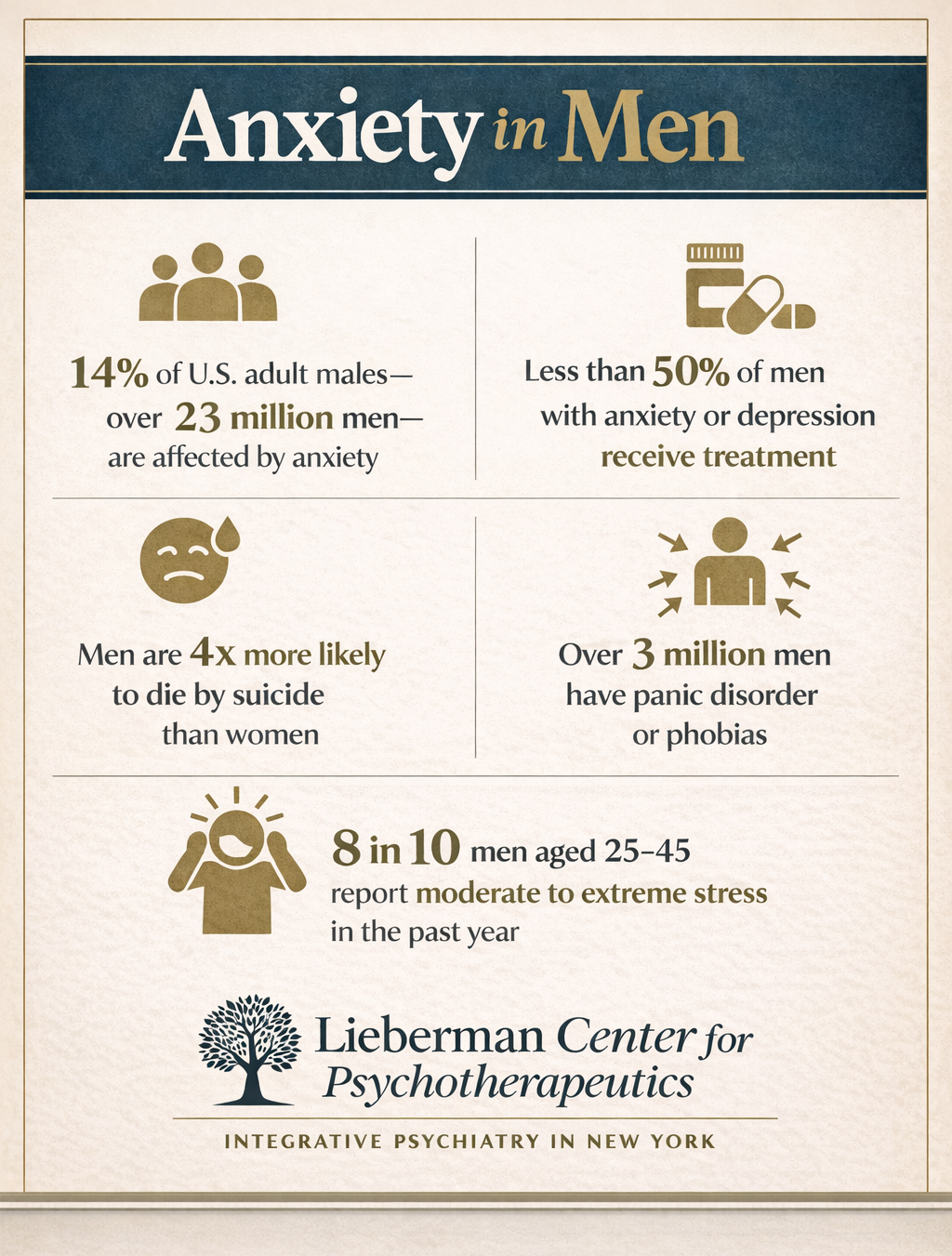
- Around 14% of U.S. adult males — over 23 million men — are affected by anxiety.
- Less than half of all men with depression and anxiety receive the treatment they need.
- Anxiety is a significant risk factor for suicide. Men are 4 times more likely than women to die by suicide.
- More than 3 million men live with panic disorder, agoraphobia, or other phobias.
- 8 in 10 men aged 25 to 45 report experiencing moderate to extreme stress in the last year.
Symptoms of anxiety in men
Officially, the symptoms of anxiety are the same regardless of gender or sex. There’s a recognized set of diagnostic criteria laid out in the Diagnostic and Statistical Manual of Mental Disorders (DSM) that applies to everyone.
These symptoms include:
- Excessive and persistent worry that feels difficult to control
- Feeling restless, keyed up, or constantly on edge
- Becoming easily fatigued, even without clear physical exertion
- Difficulty concentrating or feeling like your mind goes blank
- Sleep disturbances, including trouble falling asleep, staying asleep, or restless, unsatisfying sleep
- Physical signs of anxiety, including excessive sweating, muscle tension, or a pounding heart
But research also shows that anxiety (and depression) in men can show up in unique ways. For example, men can be more likely to:
- Feel intensely irritable or angry, and can even lash out in aggressive or violent behaviors
- Use substances (including alcohol, cannabis, or prescription medications) in an attempt to self-medicate and relieve anxiety
- Experience changes in libido, either losing interest in sex or having a higher sex drive than normal
- Brush off unexplained physical symptoms, like chronic headaches or stomach problems, as “unrelated” to mental health
- Use problem-solving as a coping strategy (and, sometimes, can end up feeling frustrated if this problem can’t be neatly solved)
- Feel ashamed about being anxious, which keeps them stuck in a downward spiral
- Rely on escapist behaviors, like overworking or an obsession with sports/exercise, to avoid dealing with anxiety
So if you’re a man, your experiences with anxiety might not look like the more “typical” presentation of excessive worrying or nervousness. That doesn’t mean you don’t deserve mental health treatment.
Types of anxiety that men may experience
There are several different types of anxiety disorders, each with different symptoms. Men can experience any kind of anxiety. But research shows that generalized anxiety disorder and performance anxiety (especially sexual performance anxiety) could be especially common in men.
Here are some of the different types of anxiety and how they might show up for men.
- Generalized anxiety disorder: Persistent, hard-to-control worry about multiple areas of life, such as work, finances, health, or relationships. Men with generalized anxiety disorder may describe feeling constantly “on alert” or mentally exhausted rather than overtly anxious.
- Social anxiety disorder: Persistent, hard-to-control worry about multiple areas of life, such as work, finances, health, or relationships. Men with generalized anxiety disorder may describe feeling constantly “on alert” or mentally exhausted rather than overtly anxious.
- Panic disorder: Recurrent panic attacks that involve sudden surges of intense fear, along with physical symptoms like chest pain, shortness of breath, dizziness, or a racing heart. Some men misinterpret these attacks as heart problems and avoid seeking mental health care.
- Performance anxiety: Anxiety tied to pressure to perform, often related to work, athletics, or sex. Sexual performance anxiety is particularly common in men and can create a cycle of fear, avoidance, and shame.
How does a man with anxiety behave?
You might be worried about a man in your life and wonder if their behavior is a result of anxiety or something else. There’s no one way that men with anxiety behave, and the only way to get real answers about whether or not someone has an anxiety disorder is to get evaluated by a mental health provider.
But, generally, many men with anxiety:
- Pull away emotionally, spending less time talking or sharing what’s going on with them
- Seem more irritable or quick to anger, even over small or everyday things
- Shut down during conflict or avoid important conversations altogether
- Become more controlling about routines, plans, finances, or decisions
- Throw themselves into work, exercise, or other distractions and rarely slow down
- Rely more heavily on alcohol, cannabis, or other numbing behaviors to “take the edge off”
If a man in your life experiences these symptoms, then they could be struggling with anxiety.
Important note: Anxiety doesn’t excuse violent or abusive behavior. If you feel unsafe in your relationship, you can contact the National Domestic Violence Hotline at 1-800-799-SAFE (7233) or visit thehotline.org for confidential help and resources.
What causes anxiety in men?
The common causes of anxiety are similar across genders and sexes. There’s no single thing that causes anxiety for everyone. For most people with anxiety, different risk factors come together.
These risk factors include things like:
- Genetic vulnerability and family history
- Chronic stress and nervous system dysregulation
- Inflammation and immune system imbalances
- Hormonal factors, including testosterone changes
- Nutritional deficiencies (such as magnesium, B vitamins, or iron)
- Sleep deprivation or circadian rhythm disruption
- Substance use, including alcohol or stimulants
- Past trauma or adverse childhood experiences
But men experience unique stressors that can sometimes lead to anxiety as well. For example:
- You could work in a high-pressure job, which places constant demands on your performance and availability
- You might be the breadwinner in your family, and have to carry the weight of financially supporting your loved ones on your own.
- You may feel pressure to suppress emotions or appear “strong,” which can prevent you from processing stress in healthy ways
- You might not have social connections whom you feel like you can emotionally depend on
Why it’s important to get help for your mental health
Anxiety is a very real and common mental health condition, but it’s also a treatable one. Most men who seek help from a mental health professional learn how to manage their anxiety symptoms to the point where they’re no longer getting in the way of their success and functioning.
Some men try to manage anxiety on their own through self-help methods. This is okay, especially if your symptoms aren’t severe. For example, exercising has been proven by research to reduce stress and anxiety.
The problem is that many strategies that people use to try to feel better can actually make anxiety worse.
For example, if you have social anxiety, you might drink to try to calm your nerves. Or you might start avoiding social gatherings altogether. But not only do these strategies not help you feel better in the long run, but they can actually make things worse.
Regardless of whether it’s anxiety or depression (or something else), a mental health disorder requires professional intervention. Untreated anxiety can:
- Lead to chronic problems at work, including burnout, reduced performance, job instability, and even termination
- Directly and indirectly cause serious physical health conditions like heart disease and stroke
- Put strain on your marriage or partnership
- Affect the relationship you have with your children
- Raise your risk of developing other mental health conditions like depression and psychosis
Many men find that when they start addressing their mental health, they see transformative effects through their entire lives. They start thriving at work, without burning themselves out. The relationships they have with their spouse and children get stronger and more loving. They feel deeply confident and secure in a way that anxiety may have robbed them of before.
Anxiety treatment for men in NYC: What actually works
Many men benefit from integrative psychiatry for anxiety, which combines therapy, medication, and biological evaluation.
The type of therapy that’s often recommended for both anxiety and depression is cognitive-behavioral therapy, or CBT. CBT is an umbrella with many other types of effective anxiety treatments — including acceptance and commitment therapy (ACT) and exposure therapy — falling under it.
There are also integrative psychiatry methods that can make a big difference. This can include:
- Targeted nutritional supplementation
- Structured exercise plans
- Improving sleep quality
- Addressing inflammation or hormonal imbalances
- Identifying underlying medical contributors that may be worsening anxiety symptoms.
Psychiatric medication can also be used to help treat anxiety (as well as co-occurring issues such as depression).
Many healthcare providers use medication as a band-aid solution to temporarily treat symptoms. For example, they might prescribe a sleep aid to help you fall asleep faster. The problem with this is that it doesn’t address the root causes of your anxiety.
There’s nothing wrong with anxiety medication, and it’s often a very helpful part of a comprehensive treatment plan. But medication tends to work best when it’s combined with therapy and a deeper evaluation of what’s driving your symptoms. Without addressing underlying contributors, symptoms often return once medication is stopped.
Get anxiety treatment designed for men in NYC
At the Lieberman Center for Psychotherapeutics, we take an integrative and concierge-based approach to treating anxiety in NYC. We focus on root-cause evaluation to help you treat anxiety where it started. We run comprehensive lab work for every client to better understand the biological, psychological, and lifestyle factors contributing to anxiety symptoms.
If you’re ready to invest in yourself, schedule a free discovery call with our founder. We’re on standby to help you get through this.