

Your thyroid and anxiety may feel like two separate problems, but research shows they’re closely tied. When your thyroid hormone levels are off, it can create symptoms that look and feel exactly like anxiety – which is why so many people don’t realize a medical condition is driving their emotional symptoms.
This is why it’s so essential to look at both physical and psychological factors together when evaluating mental health.
At the Lieberman Center for Psychotherapeutics, we provide integrative psychiatry in NYC that can help you get to the root cause of your symptoms.
Here’s what the science says about the link between your thyroid and anxiety.
Do thyroid problems cause anxiety?
Research shows that the thyroid gland directly impacts your mental health. When your thyroid isn’t working like it’s supposed to, it can cause symptoms that look a lot like anxiety.
Your thyroid is a gland, located at the base of your throat, that helps regulate your metabolism, energy levels, and many of your body’s internal processes. Thyroid hormones can influence things like heart rate, digestion, and how your nervous system activates, which means even small hormonal changes can change the way you feel both physically and mentally.
Studies have found that thyroid disease and anxiety have a bidirectional relationship, meaning that each affects the other. Thyroid issues can directly cause mental health symptoms like depression and anxiety. But living with high levels of stress and anxiety can also trigger or worsen thyroid symptoms.
Many people also experience both. You can have a pre-existing anxiety disorder, which thyroid disease can make worse.
There are two main types of thyroid disease: hyperthyroidism and hypothyroidism. Both can lead to anxiety, although it’s more common with hyperthyroidism.
Hyperthyroidism and anxiety
Hyperthyroidism is a condition that involves an overactive thyroid. This means your thyroid is producing excessive amounts of triiodothyronine (T3) and thyroxine (T4), which speeds up how every cell in your body uses energy.
These hormones increase the sensitivity of beta-adrenergic receptors, essentially making your body more reactive to adrenaline. Your sympathetic nervous system becomes overactive. That’s why even small stressors can produce a stronger physical reaction and make you feel anxious and restless.
The most common cause of this thyroid disorder is an autoimmune condition called Graves’ disease.
In one case study, the physical symptoms of hyperthyroidism can actually masquerade as an anxiety disorder, which led to misdiagnosis. This happens often, and it reflects the problem with not looking for the root causes of mental health conditions.
Hypothyroidism and anxiety
Although anxiety is more commonly linked with an overactive thyroid, it can also be linked with an underactive thyroid. This is called hypothyroidism. Research shows that people with hypothyroidism are at higher risk of developing both anxiety and depression.
Hypothyroidism slows down the body’s metabolic processes because your thyroid isn’t producing enough T3 and T4 for your cells to function efficiently. Lower thyroid hormone levels can change how neurotransmitters like serotonin and norepinephrine are produced and used in the brain, which may make you feel mentally slower and more vulnerable to anxious thinking.
An underactive thyroid also affects the hypothalamic–pituitary–thyroid (HPT) axis, which interacts closely with the hypothalamic–pituitary–adrenal (HPA), or stress axis. When you have hypothyroidism, the HPA axis compensates with higher cortisol secretion, which can increase both anxiety and depression.
Hashimoto’s disease, an autoimmune disease, is one of the most common causes of hypothyroidism. Anxiety can also appear after surgical removal of the thyroid for thyroid cancer, because hormone levels need to be replaced and carefully regulated afterward.
What do thyroid and anxiety symptoms look like?
The symptoms of thyroid-related anxiety look so much like psychological anxiety? that it can be difficult — and even impossible — to tell the difference without getting lab work to test your thyroid function.
This is why misdiagnosis is so common. Many people spend years treating anxiety without realizing that a thyroid imbalance is playing a major role, which shows why medical testing matters.
Often, anxiety and other mental health symptoms are some of the first signs of thyroid dysfunction. So even if you don’t yet have obvious physical symptoms, your thyroid may still be involved.
Here are some symptoms of anxiety that could be related to your thyroid hormone levels:
- A racing heart that comes out of nowhere, including panic attacks
- Feeling shaky or wired for no clear reason
- Sudden restlessness or irritability
- Trouble sleeping because your body won’t “turn off”
- Heat or cold intolerance paired with anxious feelings
- Muscle tension that doesn’t match the situation
Each of these shows how the thyroid can influence your nervous system.
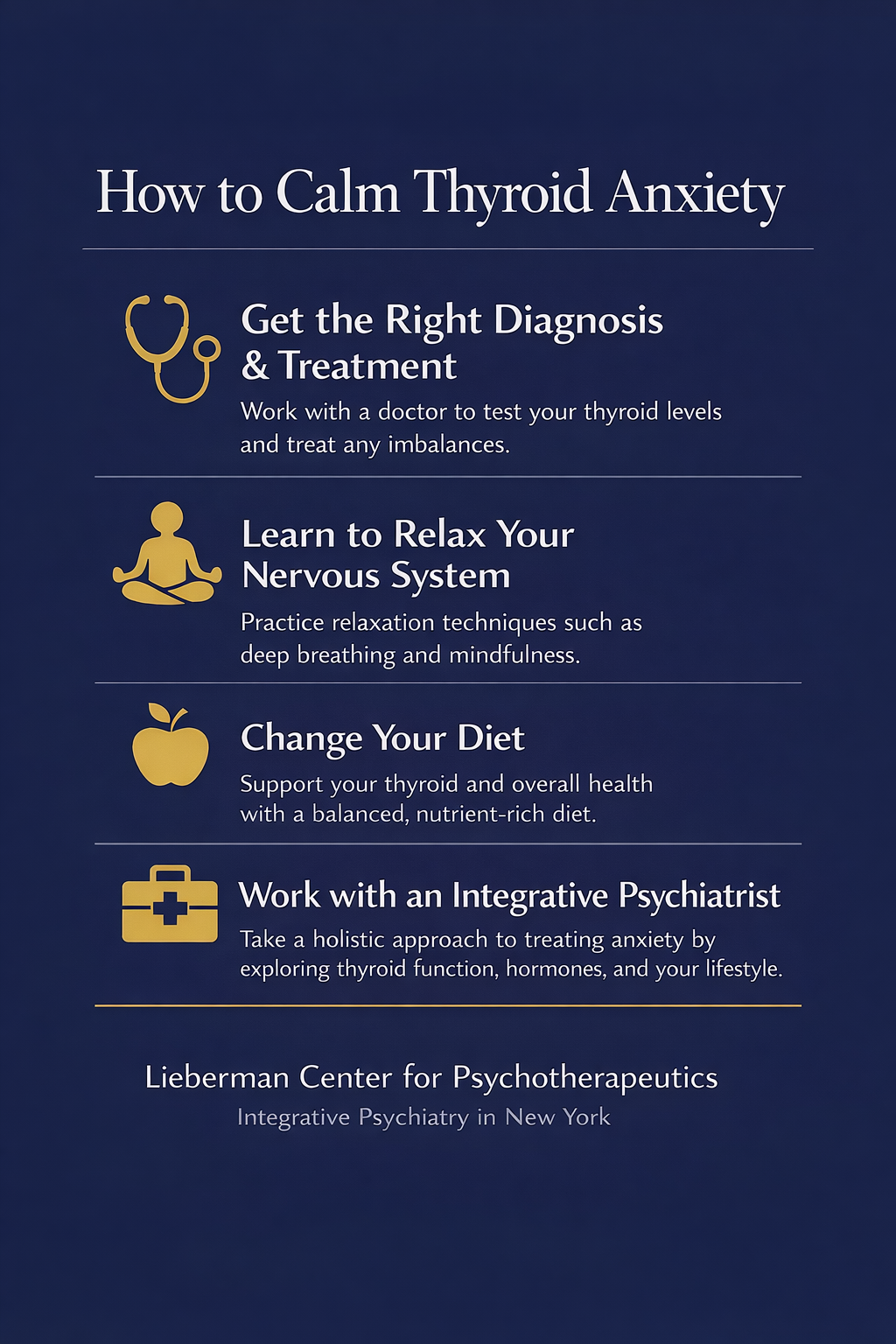
How to calm thyroid anxiety: 4 tips
Even when your anxiety symptoms are rooted in a physical cause like a thyroid condition, there are ways to manage them.
Get the right diagnosis and thyroid treatment
If your anxiety is related to your thyroid levels, then it’s critical to first get the right diagnosis and treatment for those conditions. Without addressing the root cause, anxiety treatments won’t give you the full relief you need, and you may continue experiencing symptoms that look psychological but are actually hormonal. These conditions are diagnosed by checking your levels of thyroid hormones.
Thyroid conditions are usually treated with medication to correct hormone levels. Hyperthyroidism may be managed with antithyroid medications, while hypothyroidism is treated with thyroid hormone replacement. Your provider may also recommend additional testing if an autoimmune condition is suspected.
Most of the time, you’ll need both physical and psychological treatment to fully deal with thyroid-related anxiety.
Learn how to relax your nervous system
Relaxation isn’t just about being easygoing and not worrying about anything. It’s not about having a beer in the evening to unwind. Relaxation is a physical, scientific nervous system response that counteracts your body’s stress response (fight-or-flight).
There are evidence-based ways to engage your parasympathetic nervous system, which is your body’s natural “calming” system. Breathing exercises (slow, deep breathing) grounding techniques, and mindful movement can help your body regulate itself when you’re experiencing anxiety (regardless of the cause).
Change your diet
Being more intentional about what you eat can also make a big difference, both for your thyroid health as well as mental health. Certain nutrients affect thyroid function, including iodine, selenium, and zinc. Eating a balanced diet that includes nutrient-dense foods may help keep hormone levels steadier.
But keep in mind that supplements can interact with thyroid medications or worsen symptoms if taken incorrectly. Always talk to a healthcare provider before adding anything new – especially if you haven’t been diagnosed with a thyroid condition yet but suspect you may have one.
Work with an integrative psychiatrist
An integrative psychiatrist looks at your whole health picture – not just your mood symptoms. That includes things like thyroid function and inflammation, as well as nutrition, sleep, and your stress load. It’s a way of understanding why your symptoms are happening instead of only treating what’s on the surface.
This type of care can help uncover underlying contributors to your anxiety so you can finally understand what your body is telling you. It gives you a clearer picture of how your biology and environment interact to produce mental health symptoms.
Work with an integrative psychiatrist in NYC
At the Lieberman Center for Psychotherapeutics in NYC, we offer integrative psychiatry services, including lab testing, to get to the root cause of your anxiety symptoms. If your results indicate thyroid issues, we will help you coordinate care with endocrinology to make sure you’re getting the comprehensive treatment you deserve.
The owner, Brad Lieberman, PMHNP-BC, is a board-certified psychiatric nurse practitioner who uses a research-driven, whole-person approach to understand your symptoms and create a plan that reflects both your medical and emotional needs. Book a free 20-minute introductory call today and take the first step on the road toward holistic healing.