

Research shows that job dissatisfaction is all too common, even among high earners. A recent Gallup survey found that around 60% of people report being emotionally detached from work. Nearly one in five say that they’re “miserable” in their jobs. Unfortunately, high pay doesn’t erase the stress, frustration, or mental health effects of waking up every Monday morning thinking, “I hate my job so much!”.
For senior-level professionals, the stakes can often feel even higher when you’re trying to make an exit plan. You’ve put in years of effort and labor to get to where you are today, but that doesn’t necessarily mean that you’re happy where you’ve ended up. At the same time, you have a lot more to lose, and it’s often harder to walk away.
Here’s why executives can sometimes find themselves feeling dissatisfied, and the steps you can take if you feel stuck in a job that doesn’t fulfill you.
I hate my job so much, but it pays well and I can’t quit
Reports do show that higher-income professionals are more likely to be satisfied in their jobs, which makes sense. But that doesn’t mean that everyone in these positions is always 100% happy. There are valid reasons why high-earning professionals continue to be dissatisfied.
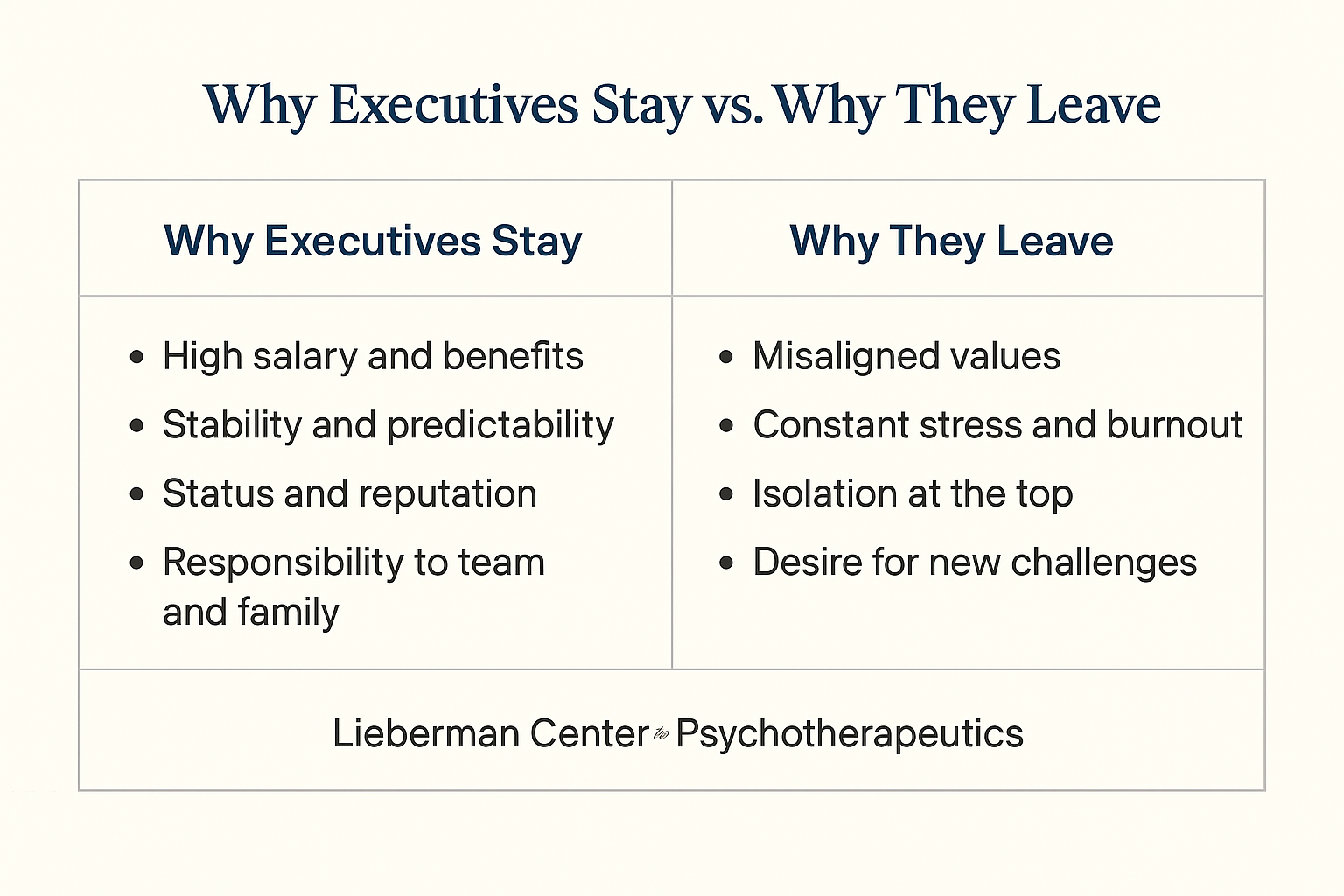
For executives and senior-level leaders, job dissatisfaction is rarely about a single problem. Often, it’s a mix of factors that pile up over time.
One common factor is a misalignment between personal values and job responsibilities. Senior leaders often spend more time in meetings, managing teams, and handling bureaucracy than they do in the parts of the work they actually enjoy and find motivating. The higher the position, the further you may feel from the kind of work that feels meaningful to you.
There’s also the weight of constant responsibility, which can weigh you down with enormous amounts of pressure and stress. High salaries typically come with high expectations, including shareholder pressure, board oversight, or investor demands. Over time, that constant pressure can lead resentment, anxiety, or burnout.
Another source of unhappiness is limited flexibility. While more junior employees may have options to job-hop, executives often feel boxed in. You’re not willing to take a pay cut, nor should you have to. You may be so accomplished that new employers assume that you’re too expensive. This can cause you to feel more and more trapped the more time goes by.
Finally, many executives experience isolation. When you’re at the top, you might find that fewer people truly understand the challenges you face. That lack of peer support makes the weight and pressure even heavier to carry. In addition, because the job pays well, outsiders may minimize your struggles by saying things like, “At least you’re compensated for it.” This can make you feel invalidated.
The reality is that money doesn’t cancel out dissatisfaction. It might keep you in the role longer, but the longer you push through a job you hate, the higher the risk that your mental and physical health will suffer.
Steps you can take when you’re feeling stuck at a job you hate
If you feel stuck in a senior-level position, the solution isn’t always to quit tomorrow. The process requires reflection, planning, and intentional action. These steps can help you regain control and make a clear decision about your current job—and your future.
Rediscover your values
Especially when you’ve been in the same role for years, it’s easy to lose sight of what really matters to you. Consider revisiting your values. Ask yourself what matters most to you in your life now — which could be different from when you first started your career. Is it growth, innovation, autonomy, impact? Or is it more like family, service, compassion?
This exercise isn’t about wishing and daydreaming. It’s about getting clear with yourself. If your job doesn’t line up with your values anymore, it’s worth asking whether the misalignment is permanent or if it’s possible to make things right again.
Even small changes can sometimes make a big difference. For example, can you slightly shift focus within your role? Can you delegate certain responsibilities that don’t feel as meaningful for you?
Sometimes, it’s about a mindset shift as well. Is there anything about your current job that helps you live a life aligned with your values? For example, if you value autonomy, maybe you value the financial freedom that this job allows you to have. Maybe this job allows you to support your family, which is something you value most.
Identify specific triggers that make you hate going to work
It’s not enough to say, I hate my job. You need to know why. Identifying the exact triggers that fuel your dissatisfaction gives you something tangible to address.
For some, the trigger is the endless stream of meetings. For others, it’s lack of recognition, constant travel, or the inability to spend meaningful time with family. Naming the specifics helps you decide whether you can realistically improve your current job—or whether you need to look for a new one.
Without this step, it’s easy to catastrophize. You may tell yourself that you “hate everything,” when in reality, there are particular aspects of the job that cause the dread. Understanding those patterns puts you back in control.
Brainstorm
Brainstorming is where you explore options without the need to immediately act on them. It’s important not to make rash decisions. Leaving a high-level position without a plan can create unnecessary risk for you and your family.
Take some time just to think about all of the possibilities. Suspend disbelief, just for a moment. What would it look like to shift industries? Is there a “dream career” that you’ve always had in the back of your mind? Can you cut back on your hours, or consult instead of working full-time? Is a sabbatical an option? Bring your family into the conversation; this affect them, too.
Once you’ve mapped out your options, you can turn those ideas into an exit plan if necessary. Having a plan reduces the anxiety that comes from uncertainty. Even if you stay in your current job for now, you’ll know you’re not trapped. You have options.
Put your mental health first
Hating your job isn’t just a mindset problem. Employment-related stress is very real, and it can have very real consequences for your health. Chronic stress has been shown to increase risk for anxiety, cardiovascular disease, sleep problems, and signs of cognitive decline impaired decision-making. In other words, it may not be sustainable to maintain the status quo.
Taking care of your mental health means being pragmatic. If the job is taking too much of a toll, address it with the same seriousness you would any other aspect of your health or your performance. Therapy, medication, exercise, executive coaching, or even simply taking PTO are all legitimate ways to protect yourself.
Mental health support for executives in Long Island, NY
At the Lieberman Center for Psychotherapeutics, we understand the position you’re in. Our executive director, Brad Lieberman, has personal experience leaving a high-stakes law career to transition into becoming a mental health provider. We speak your language, and are ready to help.
We offer therapy and medication services in several convenient locations across New York and New Jersey. Get in touch with us to book a discovery call and learn more about how we can support you in protecting your mental health.